

There is an image that can serve as an archetype for the transition from Gen X to Gen Z: a green table—imperfect, slightly warped—with miniatures glued onto heavy bases.
Subbuteo.
For a generation raised between the ’70s and ’80s, it wasn’t simply a pastime, but a form of social experience that was dense, slow, and embodied.
The Subbuteo era: material culture and the pedagogy of limits
Subbuteo wasn’t just a game; it was negotiation, improvisation, and personalization. Rules were often the subject of debate, fouls were a matter of interpretation, and time was shared. In this sense, it was a microcosm of what Pierre Bourdieu would define as a social space regulated by habitus: a set of learned, internalized practices that built relational and symbolic skills.
One didn’t just learn to “play,” but to exist in the world with others.
The experience was intrinsically imperfect. And that very imperfection was educational. As Richard Sennett would emphasize in his work on material culture and craftsmanship, the relationship with the object—the gesture, the resistance of the material, the error—is what builds a form of deep knowledge. Subbuteo was, in this sense, an exercise in manual skill and patience: an implicit pedagogy of limits.
The rise of hyperreality: how digital systems replaced physical objects
With Gen Z, the playing field changes radically. It is no longer a table, but a digital environment. It is no longer an object, but a system. Contemporary video games—from open worlds to competitive online play—don’t just simulate reality; they reconstruct it, amplify it, and sometimes replace it.
Here, the reflection of Jean Baudrillard takes root: simulation is no longer a representation of the real, but becomes hyperreality—something that precedes and conditions the experience itself.
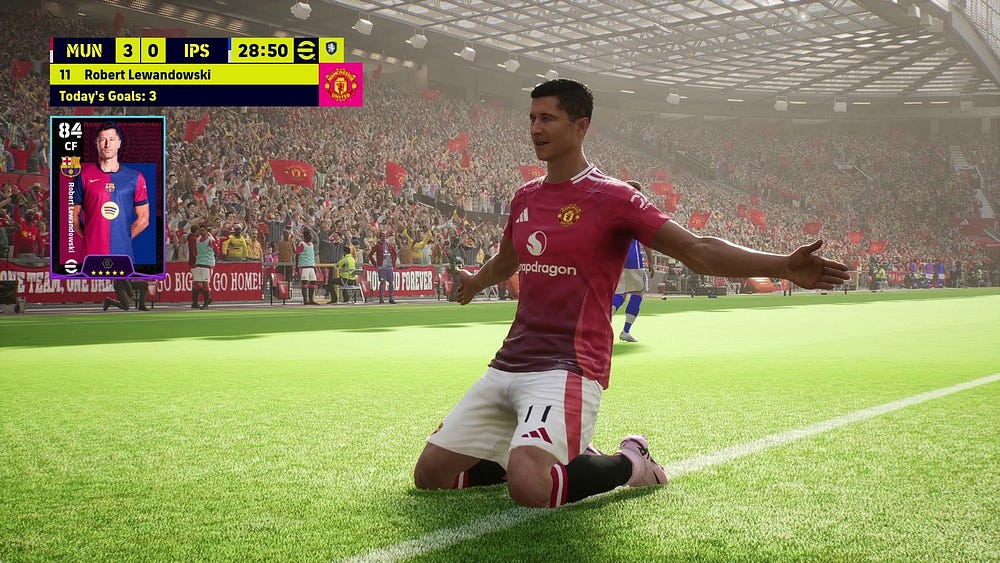
If Subbuteo was a scaled-down and admittedly fictional version of football, FIFA or eFootball (formerly PES) tend to be perceived as self-sufficient experiences, endowed with their own internal truth.
From linear time to surveillance capitalism: the evolution of engagement
The transition is crucial: from imperfect representation to perfect simulation.
This shift is accompanied by a transformation of time. Gen X experienced gaming as a circumscribed event: you started, you finished, you packed up the pitch. Time was linear and finite. In Gen Z’s video games, however, time is continuous, persistent, and often designed to never end. The logic of engagement, reward systems, and global leaderboards introduce a dimension that Shoshana Zuboff would define as part of “surveillance capitalism”: the player’s behavior is tracked, analyzed, and directed.
One no longer plays solely for pleasure, but within architectures designed to capture attention.
Alone together: reimagining social capital in the digital age
Sociality also changes form. In Subbuteo, the “other” was a physical presence, a body, a gaze. It was impossible to escape the relationship. In online video games, the other is mediated by a screen, often anonymized and disembodied. As Sherry Turkle observes, we move from a condition of “togetherness” to one of being “alone together”: together, but separate. Connected, but not necessarily in a deep relationship.
The liquid modernity of play: navigating the new cultural capital
This does not imply a one-sided loss. It would be a nostalgic error to read it that way.
Gen Z develops skills that Gen X did not possess: the ability to navigate complex systems, multitasking, rapid adaptation, and advanced digital literacy. In Bourdieusian terms, the cultural capital required to be competent in the world is changing.
However, the cost of this transformation lies in the relationship with limits and the body. In analog play, the limit was structural: the physics of the table, the precision of the gesture, the presence of the other. In the digital realm, the limit is often hidden, programmed, and invisible. The experience is fluid, but also offers less resistance.

Zygmunt Bauman would speak of liquid modernity: a context in which solid structures dissolve, and the individual must continually adapt to a flow of possibilities. Contemporary video games embody this logic perfectly: open worlds, multiple identities, infinite progression.
And then there is the perhaps more profound theme of the substitution of experience. Subbuteo always referred to an “elsewhere”: real football, the actual pitch. Video games, conversely, tend to close the circle: the experience is complete in itself, self-sufficient. It does not refer outward; it holds you in.
The ontological leap
In this sense, the transition from Subbuteo to video games is not just technological, but ontological. It is the transition from a world mediated by objects to a world mediated by algorithms; from a situated experience to a designed experience; from a negotiated sociality to an infrastructured sociality.
The real question, then, is not to establish which generation is “better,” but to understand how the forms through which we learn, play, and construct meaning are changing. And, above all, what skills we risk losing when play stops being an imperfect approximation of reality and becomes a perfectly designed alternative reality.
